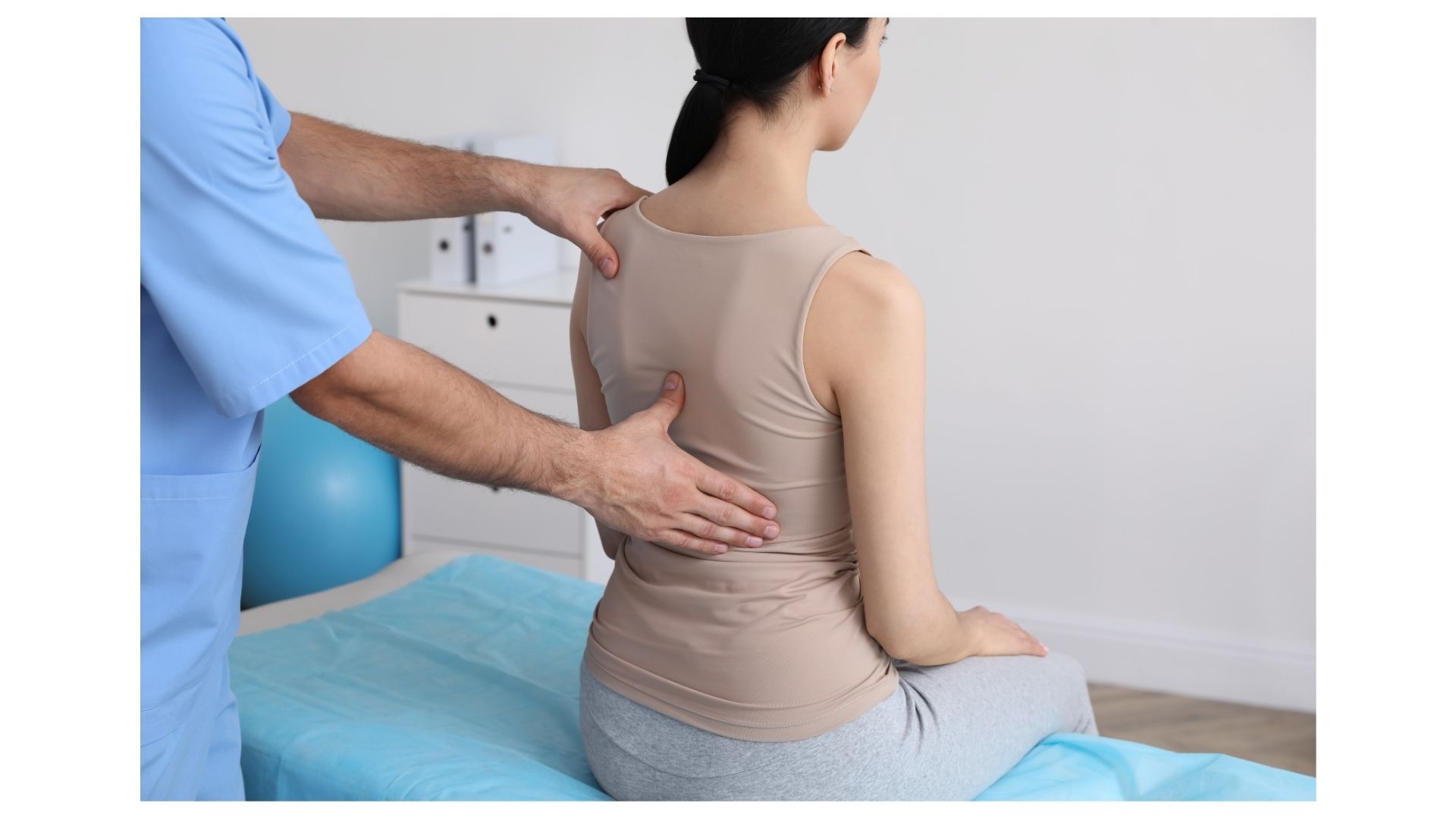
Scoliosis Management in Fishers: Neurologic-Based Care for Spinal Curves
When a child comes home from a school screening with a note about scoliosis, or when an adult finally gets imaging that explains years of back pain and uneven posture, the response from conventional medicine is often the same: monitor it, brace it if it progresses, and consider surgery if it progresses further. For many Fishers families, that passive framework raises an important question — is there something more proactive we can be doing?
At The Kingdom Chiropractic of Fishers, Dr. Mariah and Dr. Sam approach scoliosis from a perspective that conventional orthopedic monitoring doesn't address: the nervous system. Their neurologic-based approach to scoliosis care asks not just how curved the spine is, but why the nervous system is failing to maintain proper spinal alignment — and what can be done to address that dysfunction directly.
This post is for Fishers families and individuals who want to understand what neurologic-based chiropractic care offers for scoliosis — and how it fits within a comprehensive, collaborative management plan.
Scoliosis and the Nervous System: The Connection Most Providers Miss
Scoliosis is typically described as a structural problem — a lateral curvature of the spine that can be measured on X-ray and monitored over time. But the spine doesn't exist independently of the system that controls it. Every vertebra is positioned by muscle activity, and every muscle is governed by the nervous system.
In a healthy spine, the nervous system maintains balanced muscle tone on both sides of the vertebral column — left and right, front and back — keeping the spine upright and properly aligned. When neurological imbalance is present, muscle tone becomes asymmetrical. One side pulls more strongly than the other. Over time, that asymmetrical tension produces and perpetuates spinal curvature.
This neurological dimension of scoliosis is particularly relevant in idiopathic scoliosis — the most common form, whose cause is officially classified as unknown. The "idiopathic" designation reflects the limits of conventional diagnostic frameworks, not the absence of a cause. Emerging research in spinal neuroscience suggests that neurological asymmetry — in proprioception, in motor control, in the central processing of spinal position — plays a significant role in the development and progression of idiopathic curves.
Healing at the source, for scoliosis patients in Fishers, means addressing the nervous system imbalances that contribute to abnormal spinal curvature — not just monitoring the curve itself.
How Subluxations Contribute to Scoliosis
Subluxations — spinal misalignments that disrupt normal nervous system function — are a central focus of care at The Kingdom Chiropractic. In the context of scoliosis, subluxations are relevant in two interconnected ways.
First, subluxations contribute to the neurological asymmetry that drives scoliotic curves. When vertebral segments are misaligned, the sensory input from those segments to the brain is altered. The brain's ability to accurately perceive spinal position — proprioception — is compromised, and the motor output that governs muscle tone becomes dysregulated. This contributes to the asymmetrical muscle tension that pushes and holds the spine into a curved position.
Second, scoliosis itself creates subluxations. As the spine curves, vertebral segments shift out of their neutral position and joint mechanics become abnormal. These secondary subluxations contribute to pain, restricted mobility, and nerve irritation — the functional consequences that make scoliosis more than a postural concern.
Addressing subluxations throughout the scoliotic spine — with the goal of improving neurological function and reducing the mechanical consequences of the curve — is the foundation of neurologic-based chiropractic care for scoliosis in Fishers.
What Neurologic-Based Chiropractic Care Offers for Scoliosis
To be clear about what chiropractic care can and cannot do for scoliosis: chiropractic adjustments do not straighten a scoliotic curve in the way that a brace applies corrective force or surgery restructures the spine. What neurologic-based chiropractic care does offer — and what makes it a meaningful part of comprehensive scoliosis management — includes the following:
Improved Proprioception and Neurological Balance
Specific chiropractic adjustments provide a burst of mechanoreceptor input to the brain — essentially, high-quality sensory information about spinal position that helps recalibrate the nervous system's map of the spine. For scoliosis patients in Fishers, this improved proprioceptive input can support better neurological balance and more symmetrical motor output to the spinal muscles.
Research in chiropractic neurology supports the role of specific spinal adjustments in improving proprioceptive function and reducing the neurological asymmetries associated with spinal curvature. While this research is ongoing and scoliosis remains a complex, multifactorial condition, the neurological rationale for chiropractic intervention is well-grounded.
Reduction of Subluxation-Related Dysfunction
Addressing the subluxations that scoliosis creates — along with any pre-existing subluxations that may have contributed to its development — reduces nerve irritation, improves joint mechanics, and restores more normal function to the spinal segments affected by the curve. For Fishers patients experiencing pain, stiffness, or neurological symptoms related to their scoliosis, this functional improvement can be significant.
Muscle Balance Support
The chronically asymmetrical muscle tension that accompanies scoliosis — tight on the concave side, overstretched on the convex side — responds to both soft tissue therapy and the neurological recalibration that specific adjustments provide. Addressing muscle imbalance as part of scoliosis care supports better postural alignment and reduces the mechanical strain that the curve places on the spine and surrounding structures.
Slowing Progression Through Active Neurological Support
While no conservative treatment can guarantee that a scoliotic curve will not progress, there is clinical rationale for the view that improving neurological function and reducing subluxation-related dysfunction creates a better neurological environment for spinal stability. For Fishers children and adolescents whose curves are being monitored for progression, consistent neurologic-based chiropractic care is a proactive contribution to the management plan — one that does something rather than simply watching.
Scoliosis Care for Children and Adolescents in Fishers
For the families of children and teenagers along the 96th Street corridor and throughout the Fishers area who have received a scoliosis diagnosis, the period between diagnosis and any potential orthopedic intervention is a critical window. The spine is growing, and the nervous system is still highly responsive to input — making this the time when proactive neurological care has the greatest potential to make a meaningful difference.
Dr. Mariah and Dr. Sam evaluate pediatric scoliosis patients with a thorough neurological and spinal assessment — looking at the location and degree of the curve, the presence of subluxations and their neurological effects, postural imbalances, and how the child's spine is functioning overall. From this assessment, they develop a personalized care plan and maintain open communication with the orthopedic or pediatric providers monitoring the curve.
Adjustments for children are gentle, specific, and adapted to the child's age, size, and comfort level. Many Fishers children and teenagers find chiropractic care entirely comfortable and become cooperative, engaged participants in their own spinal health. Families who first came in for related concerns often pursue scoliosis screening as part of comprehensive pediatric care, especially when postural patterns or tech-neck habits have been a concern at home. According to the National Institute of Arthritis and Musculoskeletal and Skin Diseases, early identification and proactive monitoring are key to better long-term outcomes.
Early Detection Matters
One of the most important things parents of Fishers children can do is ensure early detection of scoliosis. School screenings catch some curves, but they miss others — particularly in younger children before the adolescent growth spurt. Dr. Mariah and Dr. Sam include postural assessment and scoliosis screening as part of their pediatric wellness evaluations, giving Fishers families the opportunity to identify developing curves as early as possible when intervention is most likely to be effective.
Scoliosis Care for Adults in Fishers
Adult scoliosis — whether longstanding adolescent scoliosis or the degenerative form that develops in middle and later adulthood — presents different challenges and goals than pediatric scoliosis. Curve correction is generally not the focus in adult care. Maintaining function, managing pain, and supporting quality of life are.
The degenerative changes that accompany adult scoliosis — disc height loss, facet joint arthritis, nerve root compression — create a clinical picture that responds well to the combination of gentle specific adjustments, soft tissue work, and neurological support that The Kingdom Chiropractic provides. Adults dealing with related neck and back pain often see overlapping benefit, and those concerned about long-term wear can review the phases of spinal degeneration to understand where they stand. Daily posture habits also matter significantly. Research from the National Scoliosis Foundation emphasizes that adult scoliosis management is most effective when it focuses on function and quality of life. For Fishers adults who have been living with scoliosis for years and managing its consequences, consistent chiropractic care can make a meaningful difference in daily comfort and functional capacity.
Collaborative Care for Fishers Scoliosis Patients
Dr. Mariah and Dr. Sam are clear that neurologic-based chiropractic care is one important component of scoliosis management — not a replacement for orthopedic monitoring, bracing when indicated, or surgical evaluation when curves reach the threshold that warrants it. They work collaboratively with the other providers involved in a scoliosis patient's care, communicating clearly and ensuring that chiropractic care is appropriately integrated into the full management plan.
For Fishers families who are already working with an orthopedic surgeon or pediatric spine specialist, adding neurologic-based chiropractic care to the team adds a dimension of proactive neurological support that conventional orthopedic management doesn't provide — and that can meaningfully improve the functional experience of living with scoliosis.
Proactive Scoliosis Support in Fishers
If your child has been diagnosed with scoliosis, or if you're an adult in Fishers living with the functional consequences of spinal curvature, The Kingdom Chiropractic of Fishers is accepting new patients. Dr. Mariah and Dr. Sam would be glad to provide a thorough evaluation, discuss what neurologic-based care could offer for your specific situation, and develop a personalized plan that supports your spine at the source.
Find Us in Fishers
The Kingdom Chiropractic of Fishers
8924 E 96th Street, Fishers, IN 46037
Dr. Mariah & Dr. Sam — Serving Fishers and the surrounding Indianapolis area
Ready to Experience Better Health?
Take the first step towards optimal wellness with personalized chiropractic care at The Kingdom Chiropractic.
Related Articles
Text Neck and Tech Posture in Fishers
Hours on phones and laptops causing pain in Fishers? Discover how chiropractic care corrects text neck and protects your spine naturally.
Family Chiropractor Near Me in Fishers, IN
Looking for a family chiropractor near me in Fishers? See how one practice supports every generation, from infants to seniors, all year long.
Back-to-School Spine Alignment Check
Heavy backpacks and long school days affect growing spines. Discover why every Fishers student needs a back-to-school spine alignment check.